For me, studying Chinese has things in common with exercise. When you are in a routine of doing it every day, it is relatively easy to keep on doing it. The easiest time to go to the gym is when you just went yesterday. If you lapse and let the hours in your day fill up with something else then it is very difficult to start doing it again. It is daunting and you feel like you have lost all your progress and forgotten everything you know.
I want to do something useful to kickstart my Chinese learning and get my routine going again, it is Friday evening and I have some time for it right now. So I am going to do a quick review of all the resources I have at hand for studying Chinese because there are quite a few and it will re-energise me.

Heisig & Richardson: Remembering Simplified Hanzi. It’s a book that teaches you how to read Chinese. I love it and go on about it all the time, it’s my favourite resource. The Heisig method teaches you to recognise, read and write several hundred Chinese characters, I’ve made it up to 250 so far and need to refresh all the characters I’ve already learned.
It’s easy to get single-mindedly immersed in Heisig and use all your time learning mnemonics and how to read and write individual characters with precision. There’s no dedicated Heisig software but other popular Chinese apps have made accommodations for learners who are using the Heisig method.

AnkiApp and Skritter are my two favourite flash-card apps. I use Anki to make my own cards whenever I learn a new batch of 10-20 characters from Heisig. Making the cards helps me store the characters, pronunciations and meaning in my memory. When I’ve had a couple of successful memory tests using Anki, I then go to Skritter which is a more sophisticated and interactive programme. Its flash cards are pre-made and you can choose to learn from specific vocabulary sets. That means I can use Skritter to practise new characters and words from a specific Heisig vocabulary set or from a number of other sets, such as a set for HSK 1, or whatever you want. Skritter also stores Heisig mnemonics for those who want to use them.
ChinesePod is amazing. I want to start making more serious use of it. Normally what I do is watch instructional videos or listen to podcasts, which are graded by difficulty. These broadcasts are something I might consume while eating dinner or cleaning the kitchen or something. Presenters Fiona, Constance, Gwilym and friends are engaging and knowledgeable. There’s a lot of content, with 3,000 broadcasts in the ChinesePod library. A single broadcast could be about 15 minutes long, which I find is about the right length. There is also lots of ChinesePod content on YouTube if you want to check it out.
So far I’ve just used ChinesePod in this way, as a source of instructional media content that is entertaining and helps your pronunciation (something that can be a problem if you study on your own). In fact it’s a richer resource than that, for the following reasons.
- Each video or podcast is set up on the ChinesePod platform as a Lesson. Each lesson comes with a page of clickable dialogue in a large font so that you can practise reading the characters. Each lesson also features a vocabulary list that you can save to a vocabulary set for future study. There’s a grammar discussion, focused on some point of grammar that arises in the lesson. There are exercises for the learner to complete.
- The lessons are connected to each other. They are organised into various Levels, equivalent to HSK levels. They are also organised into multiple Courses of varying lengths. For instance, a user could choose to take the course called All The Way To Intermediate (ATWTI), a series of 31 sequenced lessons that take the complete beginner in Chinese all the way to Intermediate level. There are also short courses covering subjects such as Daily Life and courses for HSK students. Users can mark lessons as complete and ChinesePod will track and guide their progress as they move up the ranks. This is something I want to do more of.
The Chairman’s Bao is a special favourite as well. It has a library of Chinese news stories, graded by the level of fluency you’ll need to tackle the material. Much like ChinesePod, it has all sorts of sophisticated built-in features. You can bookmark stories, adding them to your personal learning archive. You can build up a “word bank” of vocabulary that you’ve encountered and be tested on it. Stories are provided in text form with an audio reading, a complete set of vocabulary, grammar discussion and there’s a comprehension quiz with three kinds of exercises to complete.
I like it because it offers something that ChinesePod doesn’t have. While ChinesePod is very slick and user-friendly, it inevitably has something of a traditional classroom feel about it as you work your way through lessons that tell you how to use numbers or how to discuss the weather or manage some simple aspect of grammar. Because The Chairman’s Bao originates in the form of news stories, it gives the user much more of a feeling of engaging with Chinese culture. The learning experience feels more connected to China and it’s a fun challenge trying to make sense of the stories. I felt proud of myself when I managed to decipher a story about a young woman who has moved to a big city to advance her career.
Here’s a three-minute overview of TCB.
Pleco is my favourite Chinese dictionary. I use it as an app mainly on my iPad but also on my phone. The dictionary contents can be filtered in lots of ways to help you find what you are looking for. There’s advice about stroke order, to help those who like to write. I’m particularly fond of the feature that shows you the word at hand in the context of a lot of different sentences, many of them highly amusing and revealing about Chinese culture.
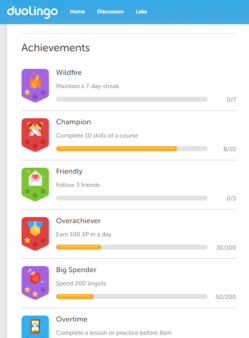
Other learning apps that I sometimes use are Duolingo and HelloChinese which are fun, visual and have strongly game-like elements. They aren’t sufficiently powerful tools to teach you a language all by themselves but they are another way to stuff a few new phrases into your head.
Both will track your progress and Duolingo additionally has a social media aspect where you are encouraged to friend and follow other users.
I use this PinYin Converter on Chinese Tools.com all the time when I want to type professional-looking pinyin with the correct accents and tones in place.
Reddit has a Chinese-learning subreddit: I might look to making friends and social contacts here before following people on Duolingo, it’s an inherently more social platform.
I aspire to be able to play games in Chinese and I have things like this on my iPad, which I am not advanced enough to understand.


I like having lots of variety in my learning materials but I also feel as though I should pick a specific course on ChinesePod or something that’s specifically tailored to help me get HSK certificates, and assiduously work through it.
How do you choose and use Chinese learning resources and materials?
 The Hanyu You Want